
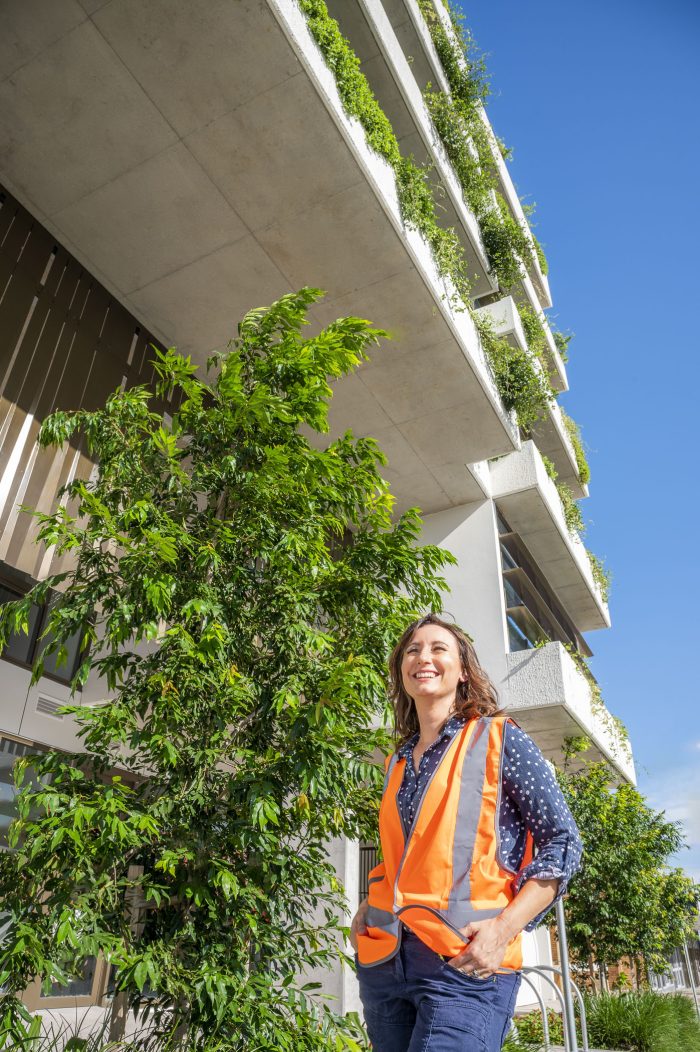
As Brisbane continues to grow, commercial landscape projects are being asked to deliver far more than visual appeal. Landscapes are now expected to manage water, support large canopy trees, reduce urban heat, improve biodiversity, and perform reliably within highly constrained urban environments.
The success of a commercial landscape is rarely determined by what is visible on opening day. Instead, it is shaped by decisions made below ground and early in the design process. Urban soils, water sensitive urban design, and tree planning form the foundation of resilient commercial landscapes, yet they are often compromised by late coordination or construction pressures.
Urban Soils Are the Foundation of Every Commercial Landscape
One of the most common challenges in commercial landscape projects is the assumption that soil behaves the same way in urban environments as it does in natural systems.
In reality, urban soils are typically compacted, disturbed, and constrained by surrounding infrastructure. They are often affected by construction traffic, stockpiling, contamination, and poor reinstatement. Without deliberate design, the soil profile beneath a commercial landscape can actively limit plant health rather than support it.
Successful commercial landscape outcomes rely on soils that are intentionally designed for their function. Soil depth, structure, drainage, organic content, and long term root growth all need to be considered in relation to buildings, pavements, and services.
When soils are too shallow or compacted, trees struggle to establish, irrigation demand increases, and long term maintenance costs rise. Well designed urban soils, on the other hand, support healthier vegetation, stronger canopy growth, and longer asset life across commercial landscapes.
Treating Soil as Infrastructure
In contemporary commercial landscape design, soil must be treated as infrastructure rather than leftover space.
This often involves engineered soil profiles, structural soils, or suspended pavement systems that allow roots to grow beneath hard surfaces without damaging pavements or services. These approaches create shared zones where trees, soil, and infrastructure coexist rather than compete.
Early coordination between landscape architects, civil engineers, and architects is critical. When soil volumes and tree locations are resolved early, commercial landscapes are more robust and costly redesigns are avoided later in the project.
Designing soils to match the scale and lifespan of trees is essential if commercial landscapes are to deliver meaningful canopy and cooling outcomes over time.

Water Sensitive Urban Design Must Be Practical and Perform
Water sensitive urban design is now a standard requirement across many commercial developments. However, the effectiveness of WSUD systems depends on how well they are integrated into the overall commercial landscape design.
WSUD elements that are treated as visual features rather than functional systems often fail to meet their environmental intent. Poor alignment between water flows, soil media, planting selection, and maintenance access can lead to clogged systems, drying out, or complete bypass during heavy rainfall events.
Effective commercial landscape WSUD slows, filters, and reuses water in ways that support vegetation health while protecting surrounding infrastructure. This requires appropriate soil media, plants suited to fluctuating moisture conditions, and realistic assumptions about long term maintenance.
In Brisbane’s climate, where intense rainfall and extended dry periods are both common, WSUD systems must be robust, accessible, and designed for real world conditions.
Street Trees and Carpark Shade Trees Rely on the Same Systems
Street trees and carpark shade trees are now critical components of commercial landscape design across South East Queensland. Councils are no longer focused solely on tree inclusion, but on canopy size, spacing, and long term performance.
Both street trees and carpark trees are typically required to grow in highly constrained environments. Narrow verge widths, tight road reserves, underground services, and sightline requirements limit available root space for street trees. In carparks, trees face minimal soil volumes beneath pavements, tight circulation layouts, heavy vehicle loads, and conflicts with drainage infrastructure.
Without adequate soil and water, trees in these locations struggle to thrive.
Successful commercial landscape projects address these challenges by integrating trees, soils, and water management from the outset. Root friendly paving systems, structural soils, and engineered tree pits are increasingly used to provide viable soil volumes beneath hard surfaces. Early coordination with service authorities allows tree planting to be planned alongside civil works rather than squeezed in later.
Carpark shade trees are now a standard council requirement due to their role in reducing urban heat, improving pedestrian comfort, and supporting biodiversity and stormwater outcomes. Delivering these benefits depends on sufficient soil depth, species selection suited to urban conditions, and irrigation strategies that support establishment.
When street trees and carpark trees are supported by well designed soils and integrated WSUD systems, they are far more likely to deliver lasting commercial landscape value.
Commercial Landscape Success Is Built Below Ground
Strong commercial landscapes are built from the ground up. Urban soils, water sensitive urban design, and tree planning are not optional extras. They are fundamental to landscape performance, longevity, and compliance.
By designing soils as infrastructure, integrating WSUD systems properly, and planning trees early, commercial developments can achieve healthier landscapes, lower long term risk, and better environmental outcomes.
If you are planning a commercial project and want to ensure your commercial landscape is set up for long term success, we would be happy to help. The right decisions early make all the difference.