
Reimagining a Forgotten Space
For years, a patch of land at Stafford Heights State School sat unused, overgrown, and forgotten. It had seen many ideas come and go, such as a bike track, an Indigenous garden, and even a vegetable patch, but nothing ever took root.
That changed when Jo Jardine, the school’s WHS Officer, asked a simple question: What if this space could be something wilder, more natural, and a place where kids could lead the way in how they play?
Jo grew up climbing trees, building cubbies, and exploring the bush. She knew the value of unstructured play and how it helps children build confidence, creativity, and resilience.
“We used to do this kind of thing growing up, climb trees, build flying foxes, create our own games. We wanted to give that back to kids today.”
With support from the principal and P&C, the school engaged Orterra’s landscape architects to transform this forgotten patch into a thriving nature play design that sits at the heart of the school’s culture.
Giving Students a Voice through Co-Design
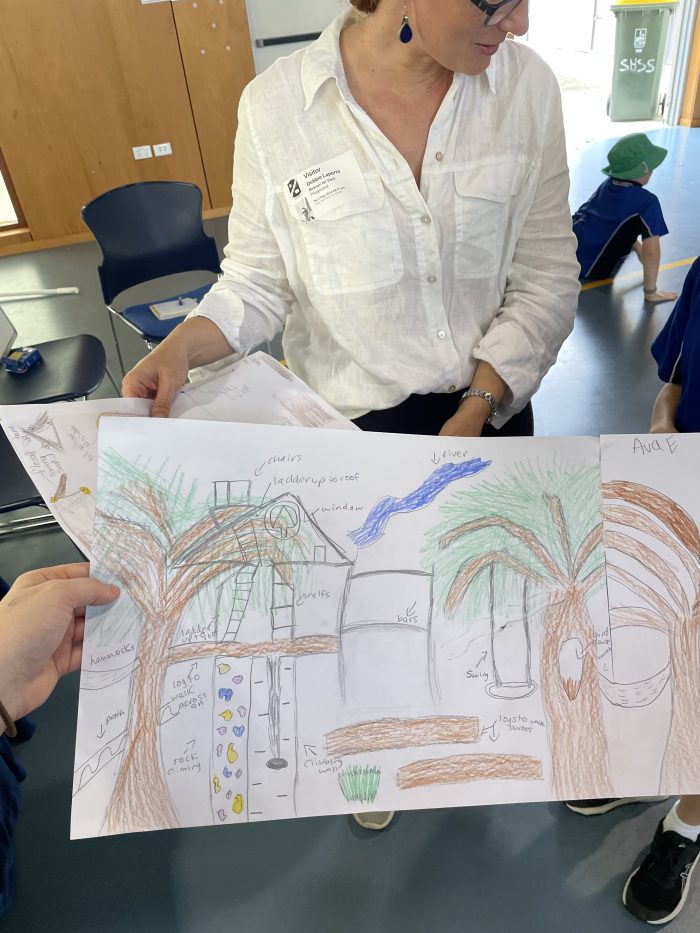
From the beginning, Orterra used a co-design approach, inviting students to help shape the vision. Instead of adults deciding what the space should be, Year 5 and 6 students joined workshops and design sessions to share their ideas.
Their insights were clear. They wanted movement, creativity, and freedom. They wanted to climb, swing, and balance, to build secret hideouts, fairy gardens, and imaginative worlds of their own making. Many had never experienced unstructured outdoor play before, yet they instinctively recognised its value.
“Giving the kids a seat at the table meant the outcome was a long way from what I had envisioned,” Jo said. “They were asking, ‘Can we please come back and play in it when it’s finished?’ That’s how excited they were.”
This process not only produced a richer design but also gave students ownership and pride in their new space. It was a vital step in fostering long-term respect and care for the area.
Designing Nature Play with Purpose
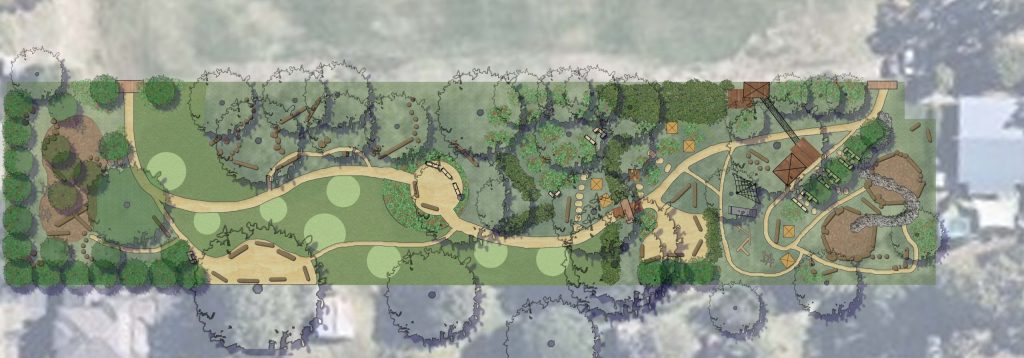
Orterra’s final school landscape design balanced imagination and practicality. The plan centred around four interconnected zones designed to support children’s movement, creativity, reflection, and learning.
The design also embedded cultural learning opportunities through Aboriginal plantings and storytelling spaces, making the project both educational and inclusive.
“This space is part of our journey to create a more inclusive and culturally safe school,” Jo explained. “There are so many ways the play space supports that.”
In keeping with Orterra’s commitment to sustainable landscape design, no trees were removed, the natural topography was celebrated, and natural materials were prioritised over synthetic ones. The concept was delivered in stages to ensure affordability and flexibility as community support grew.
Calmer Kids and Empowered Teachers
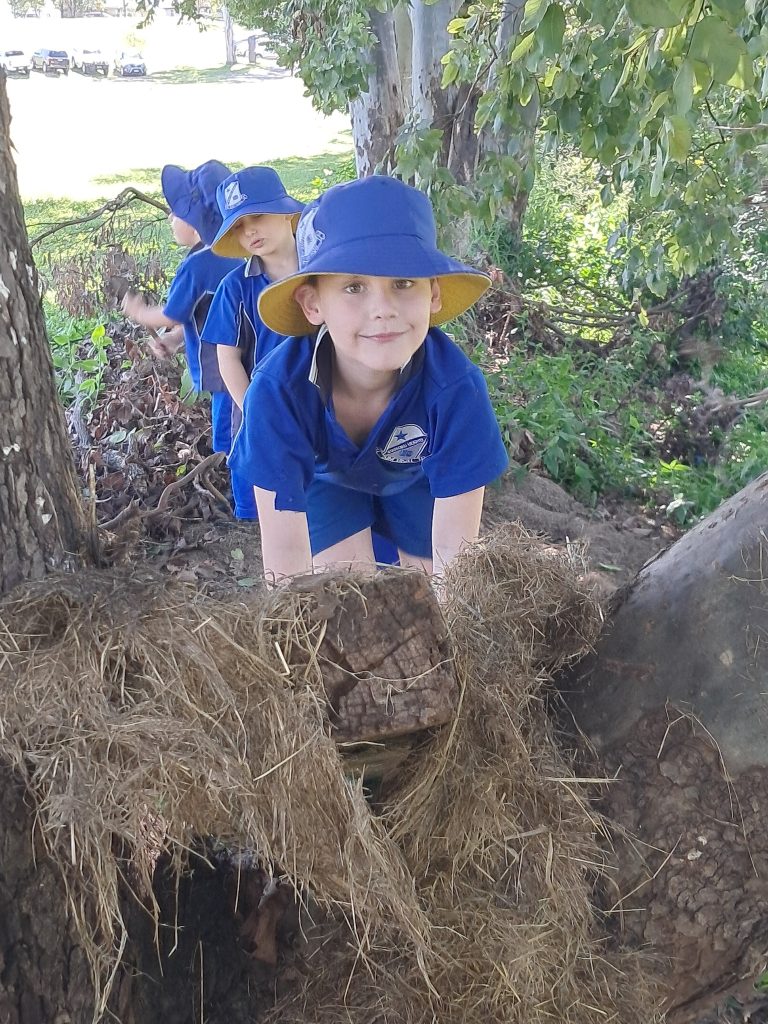
Even in its early stages, the impact of the new nature play space has been profound. Children who once wandered the oval aimlessly now gather in the nature area, building cubbies, experimenting with materials, and creating their own games.
“Those kids who normally didn’t do much during play breaks, they’re the ones who gravitate to the nature space,” Jo said. “They return to class calmer, more grounded.”
Teachers who were once hesitant about safety concerns have become advocates, observing improvements in collaboration, focus, and social behaviour. When students failed to respect the space’s guidelines, the mere mention of closing it sparked immediate cooperation. It was proof of how deeply they valued it.
Building Change One Layer at a Time
Transforming a school’s approach to play takes patience and persistence.
“It’s a long-term cultural shift,” Jo reflected. “We’re building layers: children learning to play, staff learning to let go, and the community learning to see value in unstructured, messy, natural play.”
Because supervision and scheduling were required, the school began small, opening sections of the space gradually and adjusting routines over time. Funding was managed through a staged implementation plan that blended affordable, community-built elements with longer-term investments.
Growing Confidence and Connection
The next phase of the project will expand the space and introduce new features, including more climbing elements, sensory plantings, and a whimsical portal entrance that marks a child’s transition into a world of imagination and exploration.
“I’m curious to see how confidence grows,” said Orterra Director Debbie Laporte. “In the staff, in the students, and in the community as a whole.”
Stafford Heights State School is not just building a new playground. It is cultivating a new way of thinking, one that values connection with nature, trust in children, and the power of play to shape confident, resilient learners.
Advice for Other Schools
Jo’s advice for schools considering their own nature play journey is simple.
“Be open-minded. Be ready for a slow build. Think about your own childhood. If your favourite memories were outside, climbing trees and creating secret bases, think about how you might give that to kids today.”
Why Nature Play Matters
Nature play offers measurable benefits for children’s wellbeing, social skills, and learning outcomes. Research consistently shows that contact with nature improves emotional regulation, physical activity levels, and environmental stewardship.
For schools across Queensland, integrating landscape architecture and nature play design is not just an aesthetic decision. It is an investment in children’s health, curiosity, and community connection.
Ready to Start Your School’s Nature Play Journey?
If your school has an unused area waiting for a new purpose, Orterra’s landscape architects can help you reimagine it as a thriving, sustainable space for play and learning.
Get in touch with us today to start your own transformation.