
Landscape Architect vs Ecologist: What Is the Difference on a Development Project?
On a development project, landscape architects and ecologists can sometimes appear to be looking at many of the same things. Trees. Vegetation. Creeks. Habitat. Waterways. Open space. Rehabilitation areas. But we are looking at them through very different lenses.
Understanding that difference can have a big effect on how smoothly a development moves through planning, design, approvals and ultimately construction.
What does an ecologist do?
An ecologist is primarily concerned with understanding and protecting the ecological values of a site. Depending on the project, this might include identifying existing vegetation communities, threatened species, habitat values, significant trees, waterways, wetlands, wildlife corridors and other environmental constraints. They may undertake field surveys, prepare ecological assessments and provide recommendations about what needs to be protected, retained, rehabilitated or offset.
On a development site, the ecologist might identify:
Areas of significant vegetation
Habitat trees and important fauna habitat
Threatened species or ecological communities
Wildlife movement corridors
Riparian areas and waterways
Environmental buffers
Areas requiring rehabilitation or restoration
Potential impacts arising from the proposed development
Their work helps establish the ecological constraints and opportunities that the development needs to respond to. So where does the landscape architect come in? The landscape architect takes those ecological requirements and considers how they need to work as part of the broader development.
Our role is not simply to select plants. We are looking at how landscape, ecology, engineering, planning, access, amenity, maintenance and the intended use of the site come together. For example, an ecologist may identify an area that needs rehabilitation and set the ecological requirements for it: the target vegetation community, species, planting densities, weed control, and the criteria used to measure success.
The landscape architect then works with the ecologist to fit those requirements into the site and show how they will work on the ground.
Where do the rehabilitation zones sit within the site layout?
How will the planting interface with pathways, roads, drainage infrastructure or private lots?
How do we manage sightlines and safety?
Can maintenance crews access the area?
How will crews carry out the weed control and maintenance the ecologist has specified?
How will the design protect new planting while it establishes?
What documentation does the contractor need to actually build it?
And how does all of this satisfy the development approval conditions and relevant authority requirements?
That is where landscape architecture becomes particularly important. The difference is what needs to be achieved versus how it fits A simple way to think about it is this:
The ecologist helps determine what ecological values exist, what needs to be protected and what ecological outcomes need to be achieved.
The landscape architect helps integrate those requirements into the design of the development and translate them into something that can actually be delivered.
The ecologist’s role also continues beyond the report. On many projects, the ecologist supervises rehabilitation works, monitors how the planting establishes and confirms when it has met the approval conditions. There is certainly overlap between the two professions, particularly around revegetation, rehabilitation and planting design.
But the questions we are trying to answer are different. An ecologist might ask:
What should this landscape support ecologically?
A landscape architect is also asking:
How do we make that work within the development?
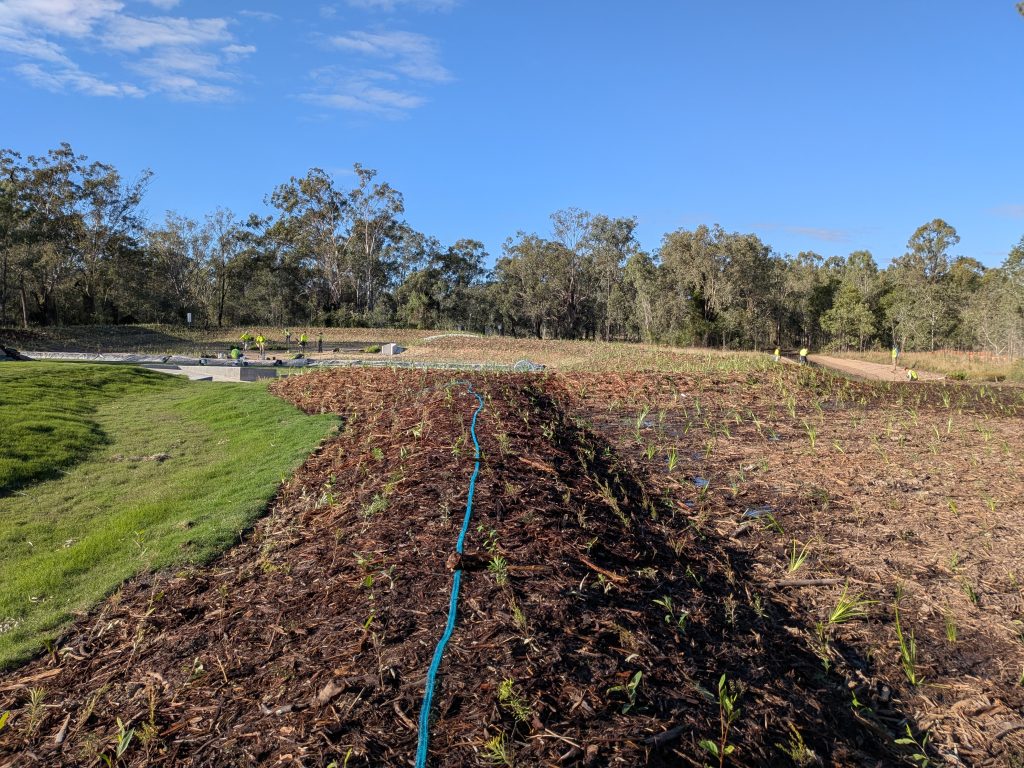
Consider a creek corridor
A creek rehabilitation project is a good example.
The ecologist may assess the existing vegetation, habitat values, weed pressures and ecological condition of the creek. They may identify vegetation communities that should be restored and set out the rehabilitation requirements.
The landscape architect then has to integrate that information with everything else
happening around the creek.
There may be stormwater infrastructure.
There may be a bikeway.
There may be maintenance access.
There may be flood constraints.
There may be safety and sightline requirements.
There may be roads, retaining walls, services and property boundaries.
Suddenly the question is not simply. What vegetation belongs here? It becomes:
How do we deliver the required ecological outcome while making the entire corridor safe, functional, maintainable, buildable and compliant?
Some ecological requirements cannot be traded off, such as riparian buffers, protected vegetation and offset obligations. That is why the ecologist should review the design as it develops, so small changes do not quietly erode the ecological outcome.
That requires collaboration between the ecologist, landscape architect, civil engineer, hydraulic engineer, planner and often several other disciplines.
Trees are another good example
An ecologist may identify an existing tree as having habitat or ecological value. That is important information. But retaining that tree within a development may require much broader coordination, often with an arborist as well.
What happens to the levels around it?
Where are the services going?
Is there sufficient soil volume?
Does a pathway need to move?
What happens to drainage?
Will construction activities affect the root zone?
How will people use the space around it?
Does the proposed landscape design support its long-term retention?
This is where the ecologist, arborist and landscape architect work together. The ecologist confirms the habitat value, the arborist sets the tree protection zone, and the landscape architect connects both with the physical design of the development.
Why developers often need both?
The best outcomes generally happen when the project team considers ecology and landscape architecture together early in the project. If the project team identifies ecological requirements after it has largely settled the development layout, they can become difficult and expensive to accommodate.
Likewise, if ecological recommendations do not consider how the team will design, build and maintain them, there can be a gap between what a report recommends and what is achievable on site. The reverse is also true. A landscape plan that uses
non-local or ornamental species, species that can become weeds, or planting that looks green but provides little habitat or buffer function can undermine the ecological outcomes the site needs. Early collaboration allows the project team to ask better questions.
What should we retain?
What can we rehabilitate?
Where should development occur?
Where are the major conflicts?
How can open space, stormwater, habitat, pedestrian movement and landscape work together?
And importantly, what will all of this look like once somebody actually has to build and maintain it?
And who will monitor the rehabilitation during the maintenance period and confirm it is complete?
Different expertise, better outcomes
Landscape architects are not ecologists, and ecologists are not landscape architects.
Nor should we try to be. We bring different expertise to a development project.
The ecologist understands the ecological systems and values that need to be considered. The landscape architect works across the physical design of the site, helping integrate those ecological requirements with people, infrastructure, planning,
engineering, construction and long-term landscape performance.
When those disciplines work together from the beginning, ecology does not have to become something that is dealt with at the edge of the project. It can shape how the team designs the development itself. And that usually leads to a better outcome for the environment, the development and the people who will ultimately use the place.
Bringing Ecology and Landscape Architecture Together
Good development outcomes happen when ecology and landscape architecture are working together from the beginning. Orterra Landscape Architects and Raptor Environmental bring complementary expertise to development projects, connecting ecological knowledge with practical landscape design and delivery. From understanding the environmental values and constraints of a site through to rehabilitation, landscape design, documentation, approvals and implementation, our teams collaborate to help create outcomes that are environmentally responsible, practical to build and maintain, and responsive to the wider development. If you have a development project where ecology and landscape need to work together, talk to Raptor Environmental and Orterra about getting both disciplines involved early.