
Stafford Heights State School: A Nature Play Transformation
The Spark: Reimagining a forgotten space
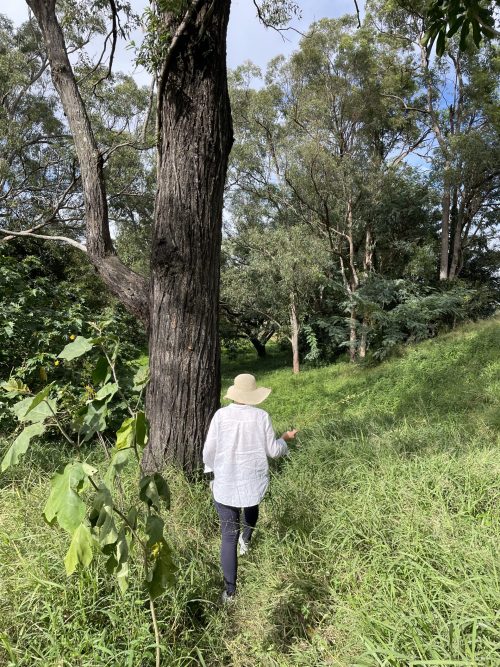
For years, a stretch of land at Stafford Heights State School sat unused—overgrown, fenced off, and largely forgotten. Various ideas had come and gone—a bike track, an Indigenous garden—but none had stuck.
That changed when Jo Jardine, then WHS Officer, proposed a new approach: what if this space could become something wilder? More natural? A place where kids could lead the way in how they play?
Having grown up immersed in the bush, Jo had seen firsthand the power of unstructured outdoor play. She’d also worked at a previous school where students were allowed to climb trees and build cubbies, without it becoming a behavioural or safety issue.
“We used to do this kind of thing growing up – climb trees, build flying foxes, create our own games. We wanted to give that back to kids today.”
With support from the principal and the P&C, the school engaged Orterra to help shape the vision into a tangible, phased plan and bring Nature Play into the heart of the school’s culture.
“This isn’t a short-term project. This is a holistic journey. We’ve got to build the children’s resilience in that space, bit by bit.”
Giving students a voice: Co-design in action
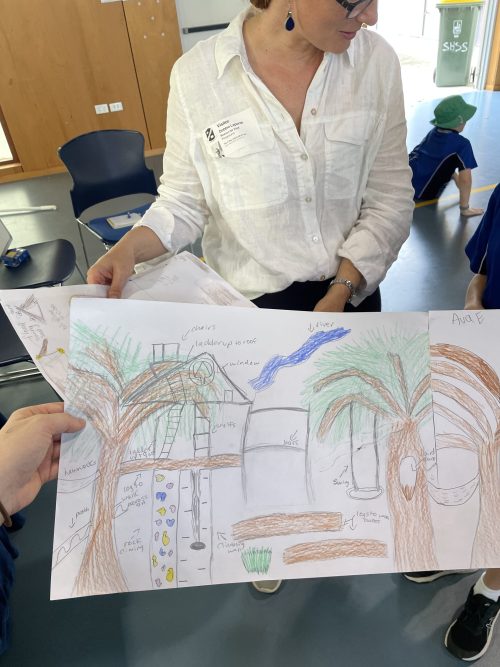
Early conversations with Orterra shifted the entire approach. Rather than adults deciding what the space should be, Orterra invited students into the design process through workshops, surveys, and image-based ideation.
This approach was transformational.
Across multiple sessions, Year 5 and 6 students explored what they loved and disliked about play spaces, both at their school and beyond. Their preferences were clear:
- They were craving movement—climbing, swinging, balancing, sliding
- They wanted escape spaces—treehouses, portals, fairy gardens, secret hideouts
- They valued agency—the chance to build, dig, create and collaborate freely
Many had never experienced unstructured natural play before, so their responses reflected both curiosity and cautiousness. But what stood out most was their thoughtfulness, not just designing for themselves, but considering what younger students might enjoy too.
“Giving the kids a seat at the table meant that the outcome was a long way from what I had envisioned,” Jo reflected. “They were asking, ‘Can we please come back and play in it when it’s finished?’ That’s how excited they were.”
The design: nature play with purpose
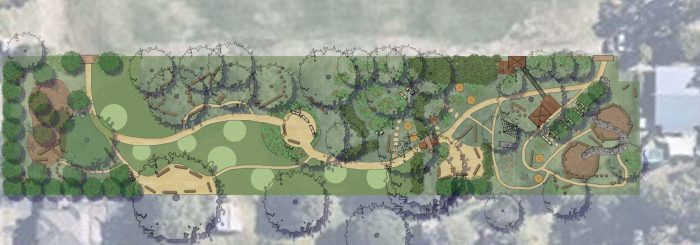
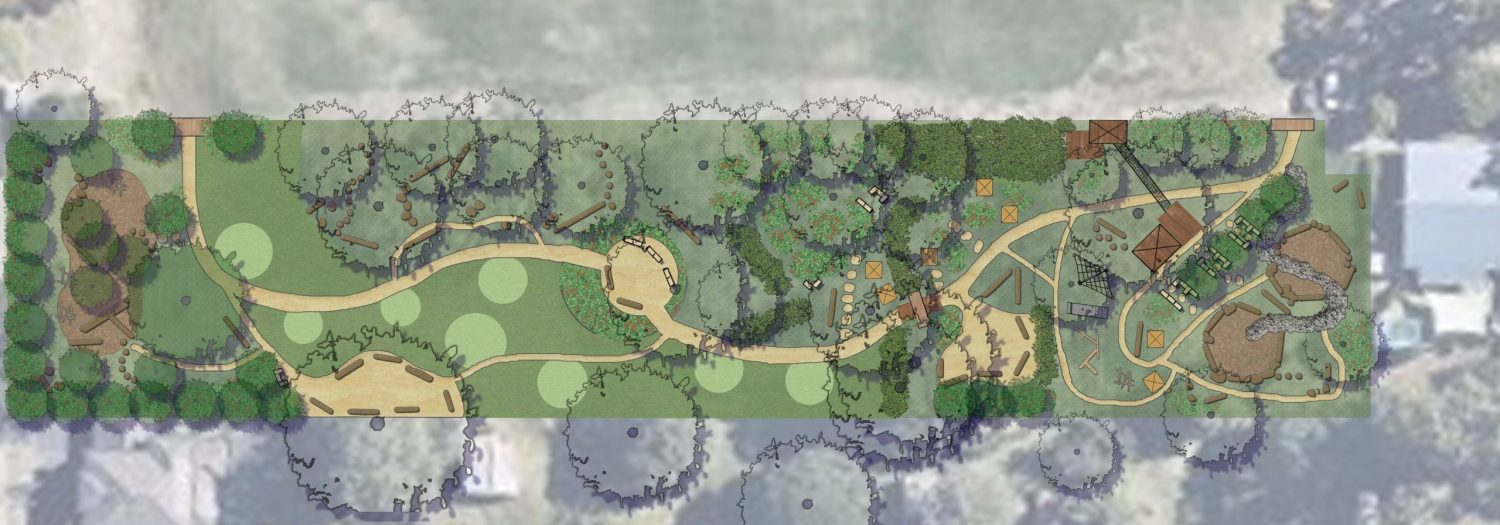
Orterra’s final concept reflected the school’s values and teaching style while staying true to the ideas raised by students. The design is built around four interwoven zones:
- Move – Gross motor spaces with rope nets, slides, balance logs, and climbing structures.
- Create – Loose parts play zones with sticks, sand, rocks and cubby-building areas.
- Self – Quiet, restorative zones for children to reflect, regulate, or observe without pressure to participate.
- Learn – Outdoor classrooms designed for flexible teaching, yarning circles, and small group work.[3]
Importantly, the design also embeds cultural learning and storytelling opportunities with Aboriginal plantings and spaces for sharing knowledge.
“This space is part of our journey to create a more inclusive and culturally safe school. There are so many ways the play space supports that.”
No trees were removed. The topography was embraced. Natural materials were favoured over plastic. And the concept was scaled so it could be implemented in stages, with flexibility to adjust as the community’s confidence and capacity grew.
The impact so far: calmer kids, curious staff
Though still in its early implementation phase, the change is already visible.
Children who used to drift aimlessly across the oval during breaks, often disengaged, disruptive, or alone, have found a place where they feel at home. They’re building cubbies, experimenting with loose parts, and immersing themselves in imaginative, active play.
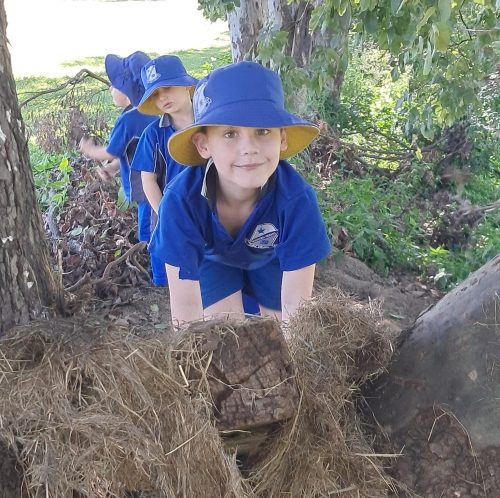
“Those kids who normally didn’t do much during play breaks—they’re the ones who gravitate to the nature space. They return to class calmer, more grounded.”
Staff attitudes are evolving too. While some were initially reluctant (concerned about sticks, snakes, or student safety) many have since come around after seeing the play in action.
One teacher aide who was unsure at first now volunteers to help in the space, watching students collaborate and self-regulate in ways they hadn’t on traditional equipment.
Staff have also noticed a shift in behaviour management. When students weren’t respecting the rules of the nature space, a brief threat to close it down was enough to spark a dramatic change in behaviour.[5]
“They didn’t want to lose the space. That’s how much they valued it.”
The challenges: one layer at a time
The biggest challenge has been managing expectations, especially around time.
“This isn’t a quick win,” Jo said. “It’s a long-term cultural shift. We’re building layers: children learning to play, staff learning to let go, the community learning to see value in unstructured, messy, natural play.”
Because the space requires supervision and some adjustments to duty rosters, the school has started small, using select areas on a rostered basis, and adding new elements gradually.
Funding is another challenge, which is why the design was staged, allowing for low-cost options (like painting pallet-built entry portals) alongside longer-term investments.
What’s next: growing confidence and capability
The next step is to expand the space available to students during breaks and begin incorporating some of the larger concept features, including more climbing structures, sensory plantings, and a fully realised portal entrance that reflects the magic of crossing into a different world.
Stafford Heights State School isn’t just building a new playground. They’re nurturing a new culture—one that values imagination, agency, and connection with the natural world. It’s a transformation that takes time, but one already bearing fruit.
“I’m curious to see how confidence grows,” Debbie said. “In the staff, in the students, and in the school community as a whole.”
Advice for Other Schools
Jo’s advice for others considering a similar journey?
“Be open-minded. Be ready for a slow build. Think about your own childhood—if your favourite memories were outside, climbing trees and creating your own secret bases, think about how you might give that to kids today. Especially the ones growing up in highly structured, urbanised environments.”