
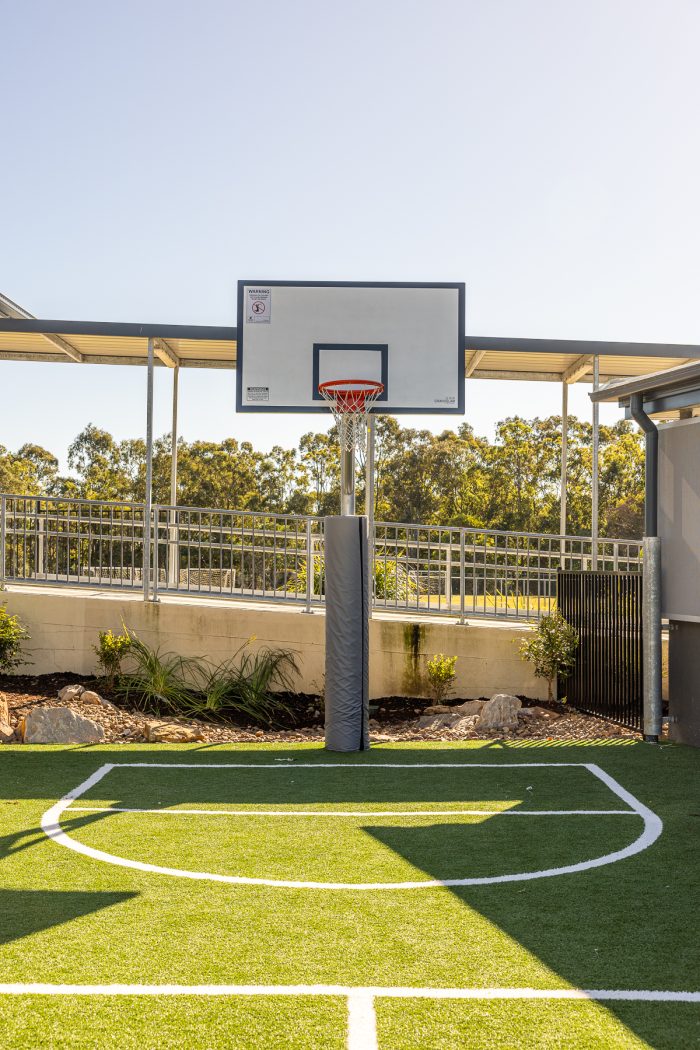
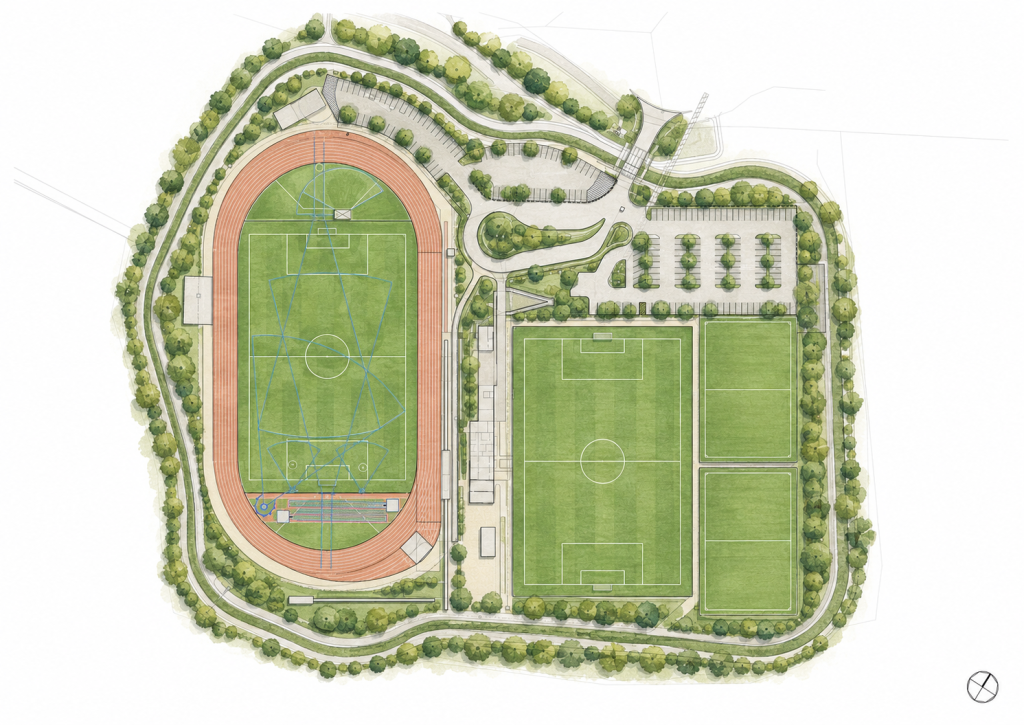
A sports precinct brings together sporting facilities, outdoor spaces and supporting amenities in one location. Thoughtful sports precinct design considers everyone who uses these places, including players, spectators, families, walkers and the surrounding community.
Fields, courts and tracks are central to a precinct, while the landscape around them shapes how people arrive, move, gather and spend time. At Orterra, designing these spaces starts with understanding the people who will use them and how the precinct can contribute to community life.
Designing a sports precinct for the whole community
Sport and active recreation support physical health, mental wellbeing and social connection. Designing for those outcomes means considering people of different ages, abilities and interests. This includes people who may regularly use the precinct without ever joining a sporting club, a group that can easily be overlooked during planning.
A parent watching training may also be supervising a younger child. A nearby resident might visit each morning to walk their dog. A person using a wheelchair needs accessible connections between parking, viewing areas, toilets and gathering spaces. These everyday experiences should inform the design from the beginning.
Talking with sporting clubs and local residents, understanding the area’s demographics and involving people with different access needs helps identify what will make the precinct useful and welcoming. Barriers to using open space vary between locations and communities. Understanding those barriers allows the design to address them.
Making access, shade and comfort part of the design
The experience of visiting a sports precinct begins before someone reaches the field. Parking, clear entrances, connected pathways and easy access to amenities help people move comfortably through the site. Clear signs and recognisable landmarks also make it easier to find the right field, particularly for someone visiting for the first time.
Providing shade within a sporting environment requires careful planning. Field dimensions, clear zones and available space can limit where trees and shade structures can be located. However, shade remains an essential consideration for spectators, people waiting to play and players taking a break.
Well positioned seating in shade gives people somewhere to rest, watch and talk. Drinking water, accessible toilets and appropriate lighting support longer visits and make everyday use more convenient.
These elements need to work together. A shaded seat is most useful when it has an accessible path, a good view and enough space for people to sit alongside friends or family. Considering these relationships early helps balance sporting requirements with the comfort of everyone using the precinct.
Creating reasons to visit throughout the week
A field that only comes to life on the weekend misses an opportunity to serve its community throughout the week. A sports precinct can support daily activity through walking loops, informal lawns, play spaces and other facilities that respond to local needs.
Someone might walk while their child trains, meet a neighbour for a catch up or bring their grandchildren to play. Providing space for these activities helps the precinct become part of everyday community life and supports greater use of public facilities.
The right combination will depend on local needs, available space and the facilities already provided nearby. Understanding how the site could be used at different times of the day and week helps shape those decisions.
Making room for incidental play
Incidental play is the spontaneous play that happens as people move through or spend time in a place. Within a sports precinct, it might happen along a pathway, beside a seating area or while a family waits for training to finish.
Small design decisions can create these opportunities. A pattern in the paving might invite a child to hop, follow a line or invent a game. Low balancing elements, stepping stones and planting with interesting textures can encourage movement, curiosity and exploration. Details that can be reached and enjoyed from a seated position help provide opportunities for people with different abilities.
These moments of play can make a visit more engaging, particularly for children accompanying a sibling or parent to sport. Locating them near shaded seating and within clear sightlines allows carers to stay connected to both the play and the sporting activity.
Incidental play needs the same care as other parts of the precinct. Its location should keep accessible pathways clear, respect sporting clear zones and avoid drawing children towards vehicles or busy cycling routes. Maintenance and the way each element will be used also need consideration from the outset.
Connecting sport, play and places to gather
Bringing different activities together requires careful planning. Dedicated play spaces need to consider supervision, nearby vehicle movements and their relationship to sporting areas. Walking and cycling routes should connect useful destinations while avoiding conflict with players and spectators.
Places to gather also need attention. Shaded seating near a clubhouse, a picnic area overlooking a play space or a quiet space away from busy courts can support different ways of spending time at the precinct.
Considering these relationships alongside drainage, planting, maintenance and the demands of regular use helps create a place that is practical to manage and comfortable to visit.
Understanding the precinct’s place in the neighbourhood
Each sports precinct forms part of a wider network of parks, sporting facilities and community spaces. Its design should respond to that broader context and identify the particular contribution it can make to the community.
Understanding what already exists nearby helps identify gaps and opportunities. Connections to walking and cycling routes, public transport and surrounding neighbourhoods also influence who can reach the site and how easily they can use it.
Considering these connections helps guide investment towards facilities that meet local needs and complement other community spaces.
Planning your sports precinct with Orterra
Orterra approaches sports precinct design by considering sporting requirements, inclusive access, landscape character, maintenance and everyday community use together. The aim is to create places where people can be active, rest, connect and feel welcome.
Planning a new sports precinct or improving an existing facility? Talk to Orterra about designing a place that supports your sporting community and creates more opportunities for everyone to enjoy being outside. Because Outside Matters.