
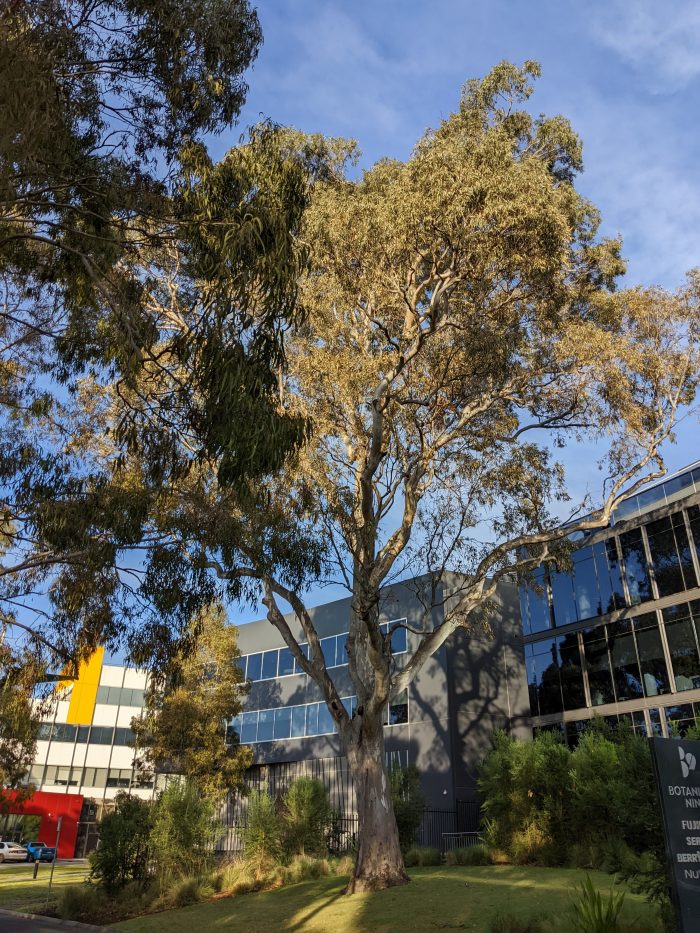
Trees are becoming increasingly important in Australian cities. They cool neighbourhoods, support biodiversity and improve the liveability of our communities. As a result, tree protection during development is now more structured and more carefully regulated.
In 2025, Standards Australia released AS 4970:2025 Protection of Trees on Development Sites, replacing AS 4970:2009. The updated standard introduces clearer terminology, stronger guidance around root protection and a more defined role for arborists in the design process. If you work in development, infrastructure, planning or design, it is important to understand these changes.
Why Tree Protection Standards Matter
Retaining mature trees on development sites is one of the most effective ways to create resilient and valuable places. Established trees deliver benefits that new planting cannot match for decades.
They provide:
• shade and thermal comfort
• stronger landscape character
• increased property value
However, development activities can easily damage trees when roots, soil or structure are disturbed. The Australian Standard provides a consistent framework to assess, protect and manage trees throughout the development process.
Key Changes in AS 4970:2025
Clearer Root Zone Terminology
One of the most significant updates is the introduction of the Notional Root Zone (NRZ). The NRZ defines the theoretical root area required for the long term health of a tree.
It is calculated as:
NRZ = Diameter at Standard Height (DSH) × 12
The standard also replaces Diameter at Breast Height (DBH) with Diameter at Standard Height (DSH). The measurement point remains at 1.4 metres above ground.
The Tree Protection Zone (TPZ) now refers specifically to the physical area protected on site through fencing or controls. This distinction clearly separates biological root requirements from construction constraints.
Defined Encroachment Levels
AS 4970:2025 introduces clearer categories for construction impacts within the root zone:
Minor encroachment
Up to 10 percent of the NRZ
Moderate encroachment
Between 10 and 20 percent of the NRZ
Major encroachment
More than 20 percent of the NRZ or any impact to the Structural Root Zone
These categories help designers, arborists and approval authorities assess risk more consistently. They also clarify when additional arboricultural input or mitigation measures are required.
Earlier Arborist Involvement
The updated standard places stronger emphasis on involving arborists early in the project. Previously, arborists were often engaged after designs had been developed.
Now, arborists are expected to contribute during planning and concept design. This approach helps teams avoid unnecessary tree loss and reduces costly redesign.
Clearer Documentation
The updated standard improves how tree protection requirements are documented by separating information into two clear components:
Tree Protection Plan (TPP)
A visual plan showing tree protection zones and fencing requirements
Tree Protection Specifications (TPS)
Written instructions outlining construction controls, root protection methods and site management requirements
Separating drawings and specifications improves communication between consultants, contractors and approval authorities.
Stronger Guidance for Root and Soil Protection
The standard also provides clearer direction on:
- Root investigation methods
- Soil health
- Non-destructive construction techniques
This reflects a broader understanding that tree protection extends beyond fencing. Soil condition, compaction, and root disturbance all play a critical role in long-term tree health.
What This Means for Development Projects
If your project includes existing trees, the updated standard will likely influence the design and approval process.
You may need to:
- Consider tree protection earlier in the design phase
- Provide arborist reports to justify encroachments
- Respond to increased scrutiny from councils and approval authorities
Planning for tree protection early can help avoid approval delays, reduce redesign costs and improve long term landscape outcomes.
Designing With Trees, Not Around Them
At Orterra, we believe trees are one of the most valuable assets on any development site. Rather than seeing trees as constraints, we see them as opportunities to shape better places. Integrating tree protection early in the design process can lead to stronger landscapes, healthier communities and more resilient developments.
Talk to Us About Tree Protection on Your Project
If you are planning a project that involves existing trees, it is worth understanding how the new standard may apply to your site. Orterra works with developers, councils, engineers and arborists to integrate tree protection into landscape and infrastructure design. If your project involves existing trees, get in touch with our team to discuss how the new standard may apply to your site.